 PL. T
PL. TThe gap between words is not neutral white space — it is one of the most consequential decisions in the history of reading.
From Continuous Script to the Breath Between Words
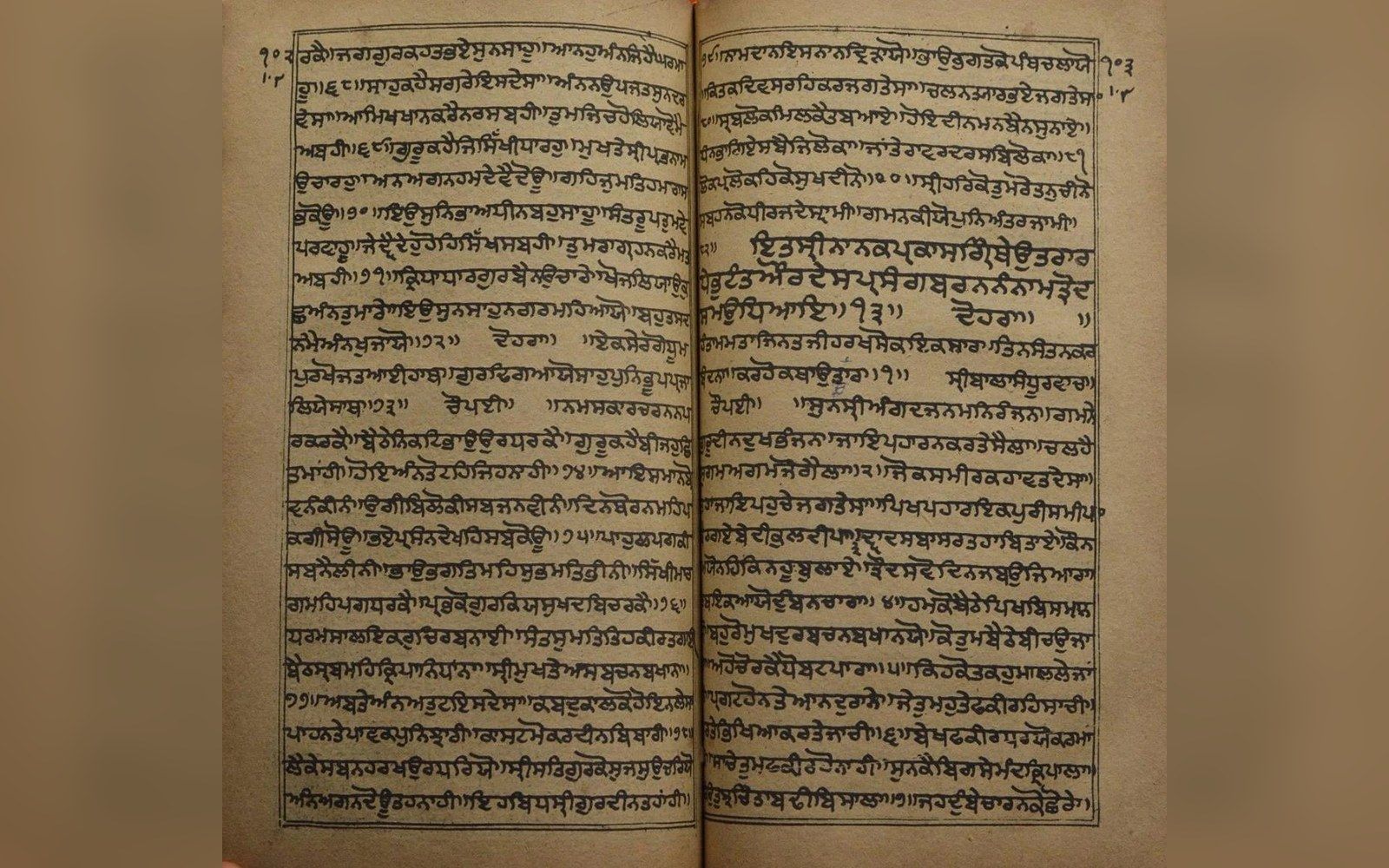
Ancient Latin manuscripts were written in scriptio continua — unspaced, unpunctuated continuous script, letters running together without pause. The text "ITISWRITTENTHISWAY" gives a fair impression of the experience. This was not carelessness; it reflected the assumption that reading was a performance.
A trained reader sounded words aloud or sub-vocally, using rhythm and context to parse where one word ended and the next began. Reading silently, for oneself, alone, was unusual enough that Augustine recorded his surprise at seeing Ambrose of Milan do it in the late fourth century.
The separation of words into discrete units was a gradual invention, not a sudden reform. Irish and Anglo-Saxon scribes, working from roughly the seventh century onward, began inserting spaces between Latin words — a practical aid, since Latin was not their native language and they could not rely on the native speaker's instinctive parsing. The innovation spread.
By the twelfth century, word spacing was standard across most of western European manuscript production, and with it came a change in reading behaviour that scholars including Paul Saenger have tracked in detail: the rise of silent reading as an ordinary, private act. The space made it possible to take in words by sight rather than by sound.
The Compositor's Problem
Print inherited the spaced word and immediately turned it into a technical puzzle. A compositor setting type by hand — lifting individual sorts from the type case and assembling them in a composing stick — had to justify each line to a fixed measure, the width of the text column. The only flexible element was the spacing between words.
Too much space and the line looks riddled with holes; too little and words appear to collide. In a narrow measure, the problem is acute: a short line with a long word at the end leaves almost no room to distribute the remaining space gracefully.
The rules governing acceptable word spacing were, for centuries, matters of workshop custom. Aldus Manutius and the Aldine Press in Venice, setting the compact italic type cut by Francesco Griffo for the small-format editions of the early sixteenth century, worked at a relatively narrow measure and pushed towards tighter spacing than the more spacious Roman hands of earlier manuscript tradition.
Hot-metal composition — Ottmar Mergenthaler's Linotype machine, patented in 1884, casting a complete line as a single slug — automated the problem in a new way. The machine justified each line by expanding spacebands, the wedge-shaped units between words. A Linotype operator could not individually coax a tight line; the machine's mechanics set the limits of what was achievable.
From the record
The spacing decision in numbers
It was Jan Tschichold, drafting the Penguin Composition Rules in 1947 for Penguin Books, who made the argument in the most exacting published form then widely circulated among British printers: word spaces should be set to approximately one-quarter of an em — roughly the width of a lowercase i with its surrounding sidebearings — and should not vary dramatically from line to line.
The ragged right margin, he argued in other contexts, was preferable to the gaping irregularity produced by forcing full justification on a narrow measure. The space between words is not simply a gap; it is the unit by which the eye groups and retrieves meaning.
The Space That Changed Reading
The word space is now so automatic that it takes conscious effort to read scriptio continua at all. What was once the normal condition of the written page has become illegible to most modern readers in a matter of seconds. That cognitive dependency — the reliance on spacing as the primary organiser of text — is the measure of how thoroughly one small invention restructured the act of reading itself.
Every line of justified type set today, with its compositor's constant bargain between too tight and too loose, is a negotiation with the same problem Irish monks first solved by leaving a little white air between the words.
From the record
Chronology of the spaced word
- Pre-seventh centuryscriptio continua standard in Latin manuscripts
- Seventh–twelfth centuryword spacing develops in Insular and then Continental manuscript practice
- Seventh–twelfth centuryword spacing develops in Insular and then Continental manuscript practice
- 1501Aldine Press italic editions set at a tight measure in Venice
- 1884Linotype mechanises line justification
- 1947Tschichold's Penguin Composition Rules codify word-space standards for British trade printing